What Did Ancient Egyptians Use as Pillows?
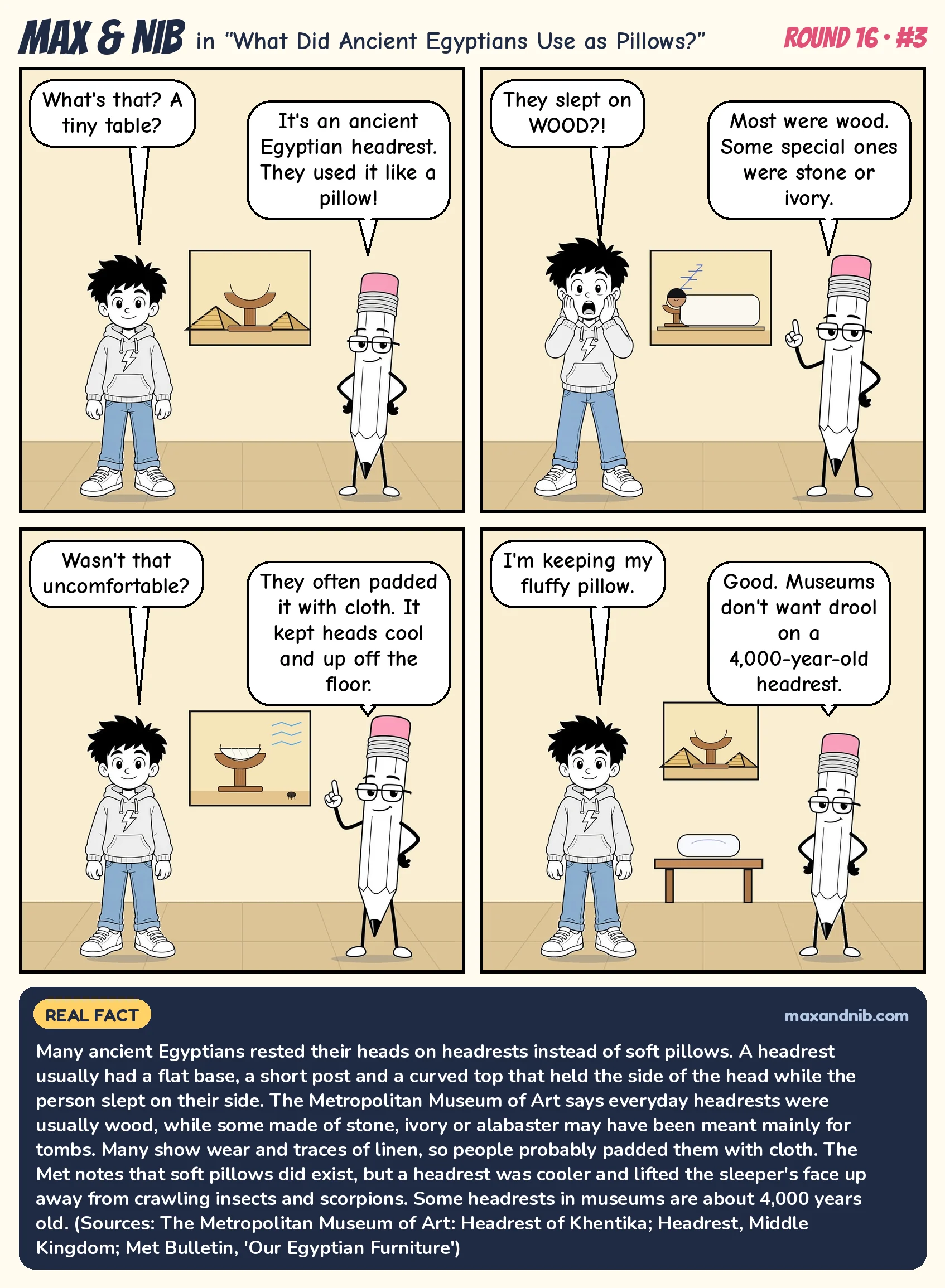
Real fact: Many ancient Egyptians rested their heads on headrests instead of soft pillows. A headrest usually had a flat base, a short post and a curved top that held the side of the head while the person slept on their side. The Metropolitan Museum of Art says everyday headrests were usually wood, while some made of stone, ivory or alabaster may have been meant mainly for tombs. Many show wear and traces of linen, so people probably padded them with cloth. The Met notes that soft pillows did exist, but a headrest was cooler and lifted the sleeper's face up away from crawling insects and scorpions. Some headrests in museums are about 4,000 years old. (Sources: The Metropolitan Museum of Art: Headrest of Khentika; Headrest, Middle Kingdom; Met Bulletin, 'Our Egyptian Furniture')